

Why Flax Is A ‘Miracle Food’ You Should Be Eating
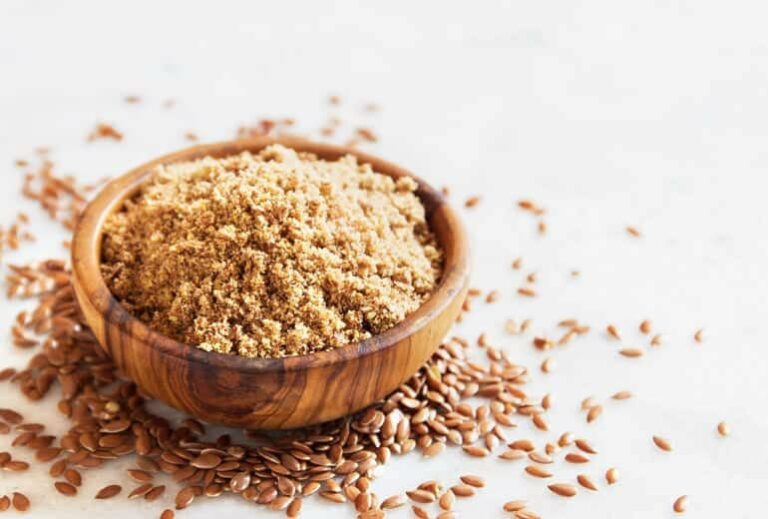
If I told you there is a food you could buy for less than $2 per serving, that had a shelf life of three or more years, and also had properties proven to stabilize your mood, lower your blood pressure, balance cholesterol, give you healthy skin and nails, and protect your bone, heart, and brain health—would you believe me?
Flax is that food!
Though our ancestors have been eating flax (also known as linseed) for thousands of years, this low-carb superfood has gotten a lot more attention in recent decades because of its fantastic benefits.
In fact, some experts even go so far as to call it a miracle food, and I agree.
Here’s why:
1. Flax Has Good Fats
Flax is full of essential fatty acids, or EFAs – these are good fats.
They’re called “essential” because the body cannot produce them—we have to get them from the food we eat every day.
Unfortunately, 80% of Americans are chronically, even desperately deficient in EFAs,1 which can lead to serious health problems down the road.
EFAs are crucial to health because they support all of the body’s systems, especially the nervous, immune, cardiovascular, and reproductive systems. They’re used to make and repair cell membranes and eliminate waste from cells.
As our brains are about 60% fat,2 not having enough EFAs in our diet can really impair our brain performance and development, so they are especially important in children’s diets as they grow.
Our brain’s nerves are covered in fat as well, so you can imagine what a diet chronically low in fat might do to one’s nerve function.
As well as the many neural benefits, cardiovascular health is greatly improved with EFAs by helping to reduce blood clot formation, blood pressure, inflammation, arterial plaque, and risk of heart disease.
We also need EFAs to stabilize mood, ward off anxiety and depression, regulate fertility hormones, and keep the thyroid functioning optimally.
2. Flax Can Balance Your Omega Ratios
Flax is the best plant-based source of the EFAs known as omega-3 fatty acids.
Most people following a Standard American Diet are deficient in omega-3 fatty acids but are getting plenty of omega-6 fatty acids from dead foods, like vegetable oil and margarine.
(Watch my video, 3 Fats That Hurt, 3 Fats That Heal, where I dive more into flax oil and two other beneficial fats you should use as staples in your kitchen.)
Why are vegetable oils and margarine dead foods? Think about it—what vegetables make oil?
Trick question—they don’t! Vegetable oils are often sourced from highly sprayed crops, like cottonseed and soybean, and those sensitive oils go rancid when exposed to light, heat, and oxygen, but nonetheless are heat-processed, packaged in clear bottles, and can stay on shelves for quite a long time. The high consumption of these so-called “healthier” alternatives tips the scales into an excess of omega-6 fatty acids.
What’s important here is balance; otherwise, inflammation is the result.
An ideal ratio of omega 3:6 fatty acids is between 1:1 and 1:4, but due to processed-food consumption, many Americans are getting exactly the opposite—at least four times the omega-6 they need, and not enough omega-3.3
Deficiencies in omega-3, as well as inappropriate omega-6 to omega-3 ratios, have been linked to many of the diseases the U.S. leads the world in: depression, cancer, heart disease, stroke, asthma, lupus, diabetes, ADHD, and Alzheimer’s.
But too many Americans are looking for omega-3 in fish oil supplements.
I’ve blogged about the problem with fish oil before, and why you want to opt-out of this highly refined, deodorized, and rancid product that comes from mercury-polluted waterways.
Two major waterways of the world have been decimated by mining billions of fish, for their oil, and two huge meta-studies have concluded that 35+ years of the fish-oil fad have not improved cardiovascular health in users of the supplement, which is what it has been primarily promoted for.
Eat REAL FOOD instead. Flax is an easy, whole-food source of omega-3s to increase your intake and balance out your omega ratios.
My favorite way to get it isn’t in oil: it’s in the seed itself. Even better if it’s sprouted, where enzyme inhibitors are released and the seed is virtually exploding with nutrition and enzymes.
3. Flax Contains Anti-Inflammatory Lignans
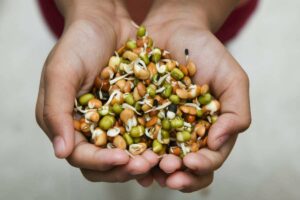
In recent years, a hot topic of research is the lignan in flax, which is a special plant compound known to prevent cancer, heart disease, and other inflammatory conditions. These antioxidants help reduce damage from free radicals, and many promising studies show that the lignans in flax reduce the growth of tumors as well.
Flaxseed has the highest known concentration of lignans of any food, by far. One serving of flax has eight times more lignans than sesame seeds and 100 times more lignans than kale, which are the next two highest-lignan foods on the list.4
But take note: flax oil doesn’t have lignans! So to get this benefit, you’ll want to eat the seed, either freshly ground or, better yet, sprouted.
Note: If you do seek out flax oil, you may come across linseed oil (its other name). Avoid this version, as it is boiled (and thus rancid) and is used in home-improvement products like wood preservatives and oil paint. That’s not exactly food, in my opinion. Look for cold-pressed flax oil sold in dark bottles, and only use it raw to avoid denaturing its sensitive nutrients. Note: use flax oil quickly, within a few weeks of opening, to avoid rancidity.
4. Flax Can Stabilize Blood Sugar
Research shows that the lignans in flax have a blood-sugar stabilization effect,5 positively impacting those with Type 2 diabetes and pre-diabetes.
Related studies showed that flax lignans can significantly delay or even prevent the onset of diabetes.6
5. Flax Improves Your Digestion
Flax is comprised of a special type of fiber that swells up in water, called mucilaginous fiber. It gets thick and gooey when you soak it, which is why you may see it in a lot of vegan baking recipes as an egg replacer.
This specific type of fiber has been shown in studies to boost the growth of good bacteria by 25%7 because it acts as a prebiotic, which is the “food” consumed by probiotics that allow your gut health to thrive. It also reduces the bad bacteria, like staph, at the same time.
Mucilaginous fiber keeps supporting digestion all the way through to the end of the digestive tract, adding bulk to your stool to help flush out your colon and promoting regularity. It is not digested, but its gel-like quality helps slow the transit of food throughout your digestive system for better nutrient absorption (and it helps you feel fuller). The immune system is housed in the gut, so you may find once your digestion has improved, other problems may resolve themselves as well.
6. Flax Improves Heart Health
Flaxseed has been shown to reduce the number of lipids in the bloodstream, which in turn also lowers the risk of heart disease.8
It also has a hand in reducing cholesterol levels; flax’s fiber helps trap excess fat and cholesterol in the bowels to be eliminated safely. The amount of cholesterol reduction is dependent upon the form that the flaxseed is in when consumed—in a 2012 study, both drinks and bread made with flax fiber showed positive results.9
7. Flax Lowers Blood Pressure Better Than Medication
High blood pressure is a modern epidemic, with the medical establishment pushing meds to control it, but a 2013 study published in the medical journal Hypertension found that four tablespoons of flax daily, for six months, lowered diastolic blood pressure an average of seven points,10 which is more than any hypertensive drug on the market!
This would correlate to massively less risk of stroke and heart disease. This may be not only the most exciting evidence presented in this post but one of the most exciting single-food health benefits I’ve ever encountered, in my many years of research!
8. Flax Helps Balance Hormones
If you’re experiencing hot flashes or menopause, flax can naturally help regulate your hormones.
The phytoestrogens it contains are known to balance the ratio of progesterone to estrogen hormones for women, which can promote fertility, ease PMS and menopause symptoms, and even reduce the risk of breast cancer.11
9. Flax Slows Aging
The protein and fatty acids in flax have been shown to improve bone quality and support the health of the optic nerve and retina,12 which is promising for preventing osteoporosis and eyesight issues as we age.
In fact, all the benefits of flax I’ve listed so far have profound anti-aging implications. A body that digests food well, distributes nutrients systematically, and has all the materials for repair and regulation available, is a body that will serve you well now and in years to come.
10. Flax is a Beauty Food
On top of its anti-aging perks from within, it has some pretty great benefits for your outer beauty as well.
The omega fatty acids help nourish your skin and hair, strengthening and bringing more shine to your locks, promoting natural collagen production in the body, and relieving dry skin from flakes, eczema, and in some cases, rosacea.
Some people choose to use it in their actual skincare routines, blending flax oil with other natural oils like jojoba to nourish skin topically.
[Related: 7 Key Nutrition Factors for Youthful Beauty You Will Love]
11. Flax is Gluten-Free
While not everyone is noticeably sensitive to gluten, we do all react to its consumption, leaving our intestinal tract chronically inflamed.
Flax is not wheat-based, so it makes an excellent alternative for using in baked goods as a partial swap for flour, as a binder, or as a simple nutrition booster.
Because it absorbs liquid very well, it can also be used to thicken things like oats and soups. (See our article on how to use it in your daily diet for more ideas.)
12. Flax Is a Great Source of Protein
For those looking for a plant-based way to get their protein in for the day, flax is a highly nutritious source containing the amino acids arginine, aspartic acid and glutamic acid.13
Amino acids are the building blocks of proteins, and when flaxseed is sprouted, the amino acid content multiplies. This form of protein is the most easily digestible as well, as they are essentially “pre-digested’ by the body during the sprouting process.
Protein in flax seeds is quite high among plant foods, with nearly 4g per 20g serving (about 2 big tablespoons). There is even more protein in sprouted flax seeds, according to a 2012 study in the Journal of Agricultural Science that compared nutritional and mineral composition of flax sprouts and unsprouted flax seeds, as well as boron, manganese, zinc, and iron.14
13. Sprouted Flax Is a Natural Probiotic
Sprouting increases the amount of naturally occurring probiotics in seeds, especially in flax.14 This abundance nourishes and heals inflammation in your gut by adding healthy, positive bacteria to your microbiome, and over time will improve digestion.
Make sure to incorporate plenty of prebiotic foods in your diet as well (like onions, asparagus, apples, bananas, and leafy greens), as prebiotics are essentially food for probiotics. The result is a healthy digestive system.
14. Sprouted Flax Contains More Bioavailable Iron
Iron, which is critical for protein absorption, can be difficult to absorb for some.
The Journal of Agricultural Science study found that sprouted flax had nearly 45% more iron content than flax seeds, which helps you to absorb the present protein in flax. In fact, the same serving of sprouted flax mentioned above (20g or 2 heaping tablespoons) provides 8% of your daily iron needs.
How To Eat Flaxseed: Sprouted is Best
GreenSmoothieGirl's Sprouted Ground Flax Seed and Tri-Omega Superfood
Flaxseed is available as the whole seed, ground, sprouted, and as an oil, and while all are nutritious options, consume high-quality sprouted, ground flax when you can for a few reasons.
First, whole flaxseed is simply not digestible. It may give your food some crunch, but the unsprouted, unground version just passes through your body without giving you any of the nutrient perks.
Like all seeds, flaxseed preserves itself with natural enzyme inhibitors called phytates to prevent digestion and thus absorption within the body.
Also known as phytic acid, it binds with minerals like calcium, magnesium, zinc, iron, and copper and prevents absorption. You can eat them all you want, but there won’t be many benefits.
People try to get around this problem by grinding the seeds or extracting the oil to make minerals like manganese, magnesium, and thiamine more bioavailable (but, unfortunately, also more prone to rancidity).
Sprouting, however, sends signals to the seed that it’s time to turn the digestion inhibitors off so it can germinate, awakening dormant nutrients and transforming the seed into a living superfood.
Sprouting biologically activates the seed, doubling the fiber and increasing the vitamins and minerals by 200–800 percent! The EFAs stabilize, and all that stored energy in the seed is unlocked and ready for use.
There’s just one issue: flax is one of the most notoriously difficult seeds to get good results with, for the home sprouter. Remember I talked about how mucilaginous fiber gets gooey in water? It’s a mess to work with.
That’s why we offer our raw, organic GreenSmoothieGirl Sprouted Ground Flax.
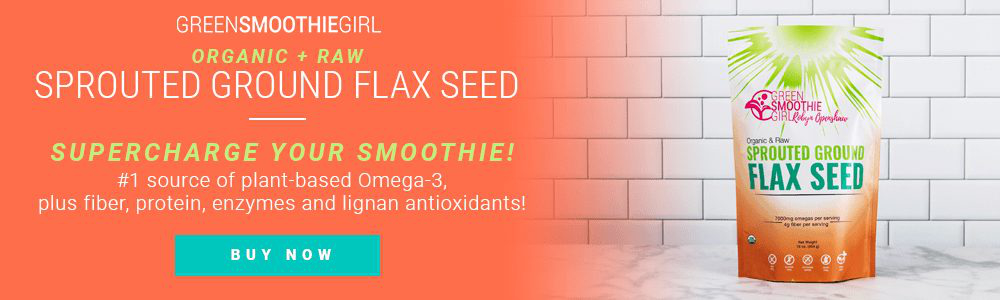
It’s been sprouted, gently dried at very cool temperatures (below 100 degrees to avoid killing enzymes), and ground to make it easy to use.
Sprouting seeds stabilizes the EFAs, which means it’s not going to go rancid quickly. We’ve tested it for shelf stability for three years, with no degradation!
Also, check out our TriOmega Superfood—it’s a super-nutritious blend of sprouted flax, chia, and broccoli seeds, and remains my favorite addition to my daily green smoothie. Sprouted flax costs less.
We focus more on flax and the benefits of sprouted food in chapter 7 of the 12 Steps to Whole Foods program, or you can join us for my FREE 12 Steps to Whole Food Video Masterclass.
There, you’ll also learn which other foods fight inflammation and which foods cause it, along with my best tips for eating healthy, tasty food without spending a ton of money.
I love these sprouted foods and use them daily. Check out my list of yummy ways to add them to your diet!
 Robyn Openshaw, MSW, is the bestselling author of The Green Smoothies Diet, 12 Steps to Whole Foods, and 2017’s #1 Amazon Bestseller and USA Today Bestseller, Vibe. Learn more about how to make the journey painless, from the nutrient-scarce Standard American Diet, to a whole-foods diet, in her free video masterclass 12 Steps to Whole Foods.
Disclosure: This post may contain affiliate links that help support the GSG mission without costing you extra. I recommend only companies and products that I use myself.
Resources
-
- Papanikolaou, Yanni et al. “U.S. adults are not meeting recommended levels for fish and omega-3 fatty acid intake: results of an analysis using observational data from NHANES 2003–2008.” Nutrition Journal. 2014 Apr 2. doi: 10.1186/1475-2891-13-31
- Chang, CY et al. “Essential fatty acids and human brain.” Acta Neurologica Taiwanica. 2009 Dec;18(4):231-41. PMID: 20329590
- Simopoulos, AP. “The importance of the ratio of omega-6/omega-3 essential fatty acids.” Biomedicine & Pharmacotherapy. 2002 Oct;56(8):365-79. PMID: 12442909
- Mercola, Joseph. “Lignans Save Lives.” Mercola. November 02, 2015.
- Pan, An et al. “Effects of a Flaxseed-Derived Lignan Supplement in Type 2 Diabetic Patients: A Randomized, Double-Blind, Cross-Over Trial.” PLOS ONE. November 7, 2007. https://doi.org/10.1371/journal.pone.0001148
- Prasad, Kailash. “Secoisolariciresinol diglucoside from flaxseed delays the development of type 2 diabetes in Zucker rat.” Journal of Laboratory and Clinical Medicine. Volume 138, Issue 1, July 2001, Pages 32-39. https://doi.org/10.1067/mlc.2001.115717
- Guevara-Arauza, Juan Carlos et al. “Prebiotic effect of mucilage and pectic-derived oligosaccharides from nopal (Opuntia ficus-indica).” Food Science and Biotechnology. August 2012, Volume 21, Issue 4, pp 997–1003. https://doi.org/10.1007/s10068-012-0130-1
- Torkan, M et al. “Effect of flaxseed on blood lipid level in hyperlipidemic patients.” Reviews on Recent Clinical Trials. 2015;10(1):61-7. PMID: 25612882
- Kristensen, Mette et al. “Flaxseed dietary fibers lower cholesterol and increase fecal fat excretion, but magnitude of effect depend on food type.” Nutrition & Metabolism. 3 February 2012. https://doi.org/10.1186/1743-7075-9-8
- Rodriguez-Leyva, Delfin et al. “Potent Antihypertensive Action of Dietary Flaxseed in Hypertensive Patients.” Hypertension. 2013;62:1081-1089. https://doi.org/10.1161/HYPERTENSIONAHA.113.02094
- Phipps, W.R. et al. “Effect of flax seed ingestion on the menstrual cycle.” The Journal of Clinical Endocrinology & Metabolism. Volume 77, Issue 5, 1 November 1993, Pages 1215–1219. https://doi.org/10.1210/jcem.77.5.8077314
- Lenzi, Q et al. “Flaxseed used since pregnancy by the mother and after weaning by the offspring benefits the retina and optic nerve development in rats.” The Journal of Maternal-Fetal & Neonatal Medicine. 2018 Mar;31(5):625-632. doi: 10.1080/14767058.2017.1293028. Epub 2017 Feb 28.
- Goyal, Ankit et al. “Flax and flaxseed oil: an ancient medicine & modern functional food.” Journal of Food Science and Technology. 2014 Sep; 51(9): 1633–1653. Published online 2014 Jan 10. doi: 10.1007/s13197-013-1247-9
- Duda-Chodak, A. “The inhibitory effect of polyphenols on human gut microbiota.” Journal of Physiology and Pharmacology. 2012 Oct;63(5):497-503. PMID: 23211303
Posted in: 12 Steps To Whole Food, Whole Food














I have heard that flax mimics soy and that it should be avoided because of that. Is this true?
this is the most detailed and complete information on flax seeds that I ever read I am surprised that you did not write a book on the subject I'm also surprised that your degree is in social work and not in nutrition you know more about nutrition than the people who have degrees in nutrition once I started reading it I found myself not able to stopI found it so very interestingI have 3 books on flax seeds by so-called experts you make them look like total fools thank you very much for your information I really think you should write a book on this subjectit's better than the books I have on Flax Seed by so-called experts
So glad you found this article beneficial Eric!
Flaxseeds must soak for 15 minutes then sprinkle on fresh fruit.